
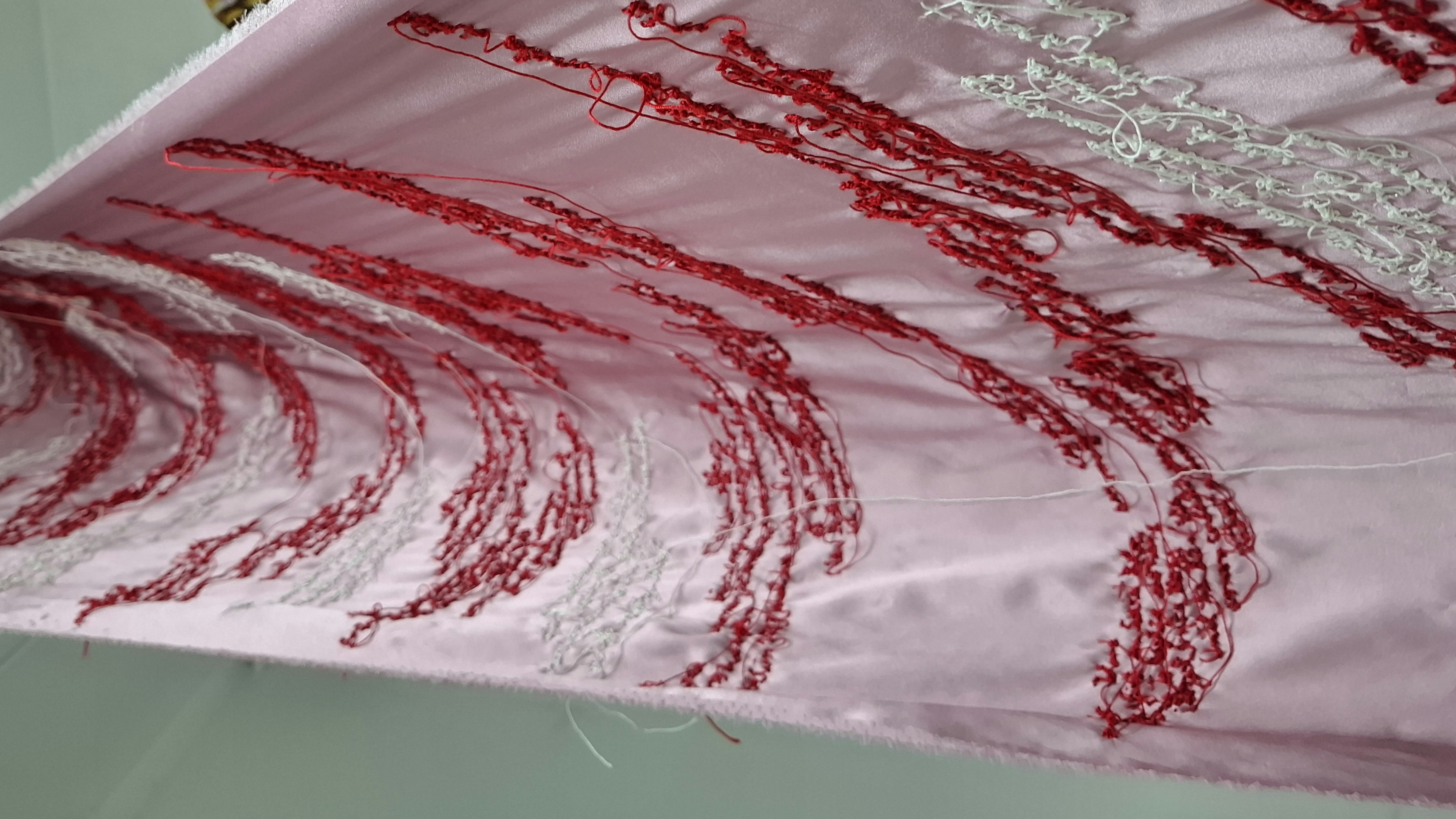
Read the documentation with resources here. See below for a bit more explanation.
Red thread
civilizations before 3500 BCE of Europe, Anatolia and Minoan
Crete to have been matrilineal, nonviolent, non hierarchical and
nature-centered
4th Millenium BCE – North Pontic steppe people assimilated the women from remaining Neolithic populations in the North of Europe, but not the men
Girls and boys in nomadic societies were trained alike in the arts of war
Indo-Europeans are said to have spread from Mesopotamia in 3rd millennium BCE
Sumerian women had the same rights as men until 2300 BCE when the right to dispose propriety was limited
Thracian men – polygamous; women were also hold in high regard, free to do whatever they wanted until marriage
some Celtic clans – matrilineal, women head of family and even of clans
Archaic Greece women had same rights as men; not interested in marriage
early Crete, common ancestry; everyone related on the mother line
Metropolis – “mother city”
Socrate named Aspasia of Miletus his teacher
women lost their rights on Classical Greece
Persian Empire, women were respected and equal to men; women with higher status chose to wear veils to showcase status
Veiling as an institution of oppression -> after Islamic conquest in 651 CE.
Roman Empire
Women were not considered full-fledged citizens
men married girls before puberty to ensure they were not sexually active
Rome was built on the rape of the Sabine women…
Judaism – matrilineal
Sephardi menstruating women can touch the sefer Torah, but Ashkenazi cannot
Women were first to convert to Christianity because:
- reduced girls infanticide
- marriage at a later age
- different role for women – nun
The Prophet Muhammad’s first wife Khadija bint Khuwaylid was a successful businesswomen who supported Muhammad emotionally and also financially.
Fatima Al-Fihri founded the first University in 859 CE, University of Al-Qarawiyin, though women were first admitted to the institution in the 1940s
12th century, the most famous Islamic philosopher Ibn Rushd advocated that women were intellectually and physically equal to men.
Norse women were under the authority of their fathers or husbands, but seemed free to do as they please if neither was still alive
From 11th to 14th century, there was an increase in the cult of Mary Magdalene and Virgin Mary, offering women a means to engage in the spiritual life without being nuns.
Article 9 of Ferdinand II of Aragon’s Sentencia Arbitral de Guadalupe in 1486, in which the king forbids lords from having sex with newlywed peasant women.
In Renaissance, women were perceived by men to be inferior.
Women in Renaissance were endeavored with house work, child bearing and caring, elderly care, field work when necessarily or assisting their husband with their wok, but without getting any credit for it.
During the 16th and 17th century, the witch hunts resulted in about 100 000 women killed
Most Ottoman women were permitted to participate in the legal system, purchase and sell property, inherit and bequeath wealth, and participate in other financial activities
Sabat M. Islambouli (1867–1941) was one of the first Syrian female physicians, under Ottoman rule.
In 18th Century, women could choose who they married, but couldn’t own land while married and divorce was very expensive
1769 – Britain Royal’s Academy allowed women to exhibit; art historians have systematically reduced women to muses or wives
Ioana Tinculeasa Rudăreasa was a Wallachian Romani woman who fought for the abolition of Slavery in Romania from 1843 to 1856.
In the 19th century, gynecologists created the notion that women’s reproductive organs made them insane. Therefore husbands committed their wives to asylums without any proof needed.
In 1860’s, Elizabeth Packard founded the Anti-Insane Asylum Society, campaigning for divorced women to retain custody of their children and for women to have the right of defense when accused of insanity
1887 – Nelly Bly faked insanity to expose the abuses at Women’s Lunatic Asylum
Matilda effect – bias against recognition of women scientists and inventors’ contribution
Marie Curie almost didn’t get her first Nobel in 1903 if it wasn’t for her husband’s insistence of her recognition
New Zealand was the first country to give women rights to vote in 1893, including Maori – Uk women revolted against Maori women being able to vote before them (1928)
USA – 1920 – white women; 1965 – black women
1944 – Gisella Perl, Romanian Jewish gynecologist, deported to Auschwitz, she performed abortions with bare minimum resources to save women from Nazis’ experiments on them..
1950s Iraq – Naziha Jawdet Ashgah al-Dulaimi – first Arab country to have a female minister and to have a law that gave women the ability to ask for divorces
The 1954 Ley de Vagos y Maleantes in Franco’s Spain saw many lesbians committed, put into psychiatric institutions and given electroshock therapy.
Poland was one of the first countries from the ex-Soviet Bloc to legalize abortion in 1956 / in 2021 – abortions became illegal
Until the ’60s or ’70s women couldn’t open a bank account without their husband permission in Europe and the US
Germany 1977′ Switzerland 1988 – women were not allowed to work without their husband approval
Afghan women officially gained equality under the 1964 constitution, which was overturned by the regime change in 1973. 2022 – Afghan women cannot become doctors or be consulted by a male doctor
1966 – Decree 770 – saw Romania as the country with the highest maternity deaths in EU
The term “femicide” was first used by South African sociologist Diana Russell in the 1970s
Until 1991 in Brazil and between 1939 – 1978 in Spain – men were allowed to kill women for infidelity
2024 – Brazil made femicide a stand alone crime in October, after recording 4 femicides and 9 attempts / day
1992 – marital rape became illegal in Switzerland
By 1998, more than 50,000 Irish women had their children taken away from them after birth
Thousands of Roma women were forcibly sterilized between 1966 and 2012 by the Czech authorities.
In Romania, the law 178/2018 was passed to criminalize forced sterilization of Roma women.
Male birth control pills trials were stopped due to the side effects women also face
Until 2024, pelvic practice exams were done on women under anesthesia until 2024 without consent.
92% of rape victims and 71% of human trafficking are women and girls
2025 – worldwide, a male partner or family member killed a woman every 10 minutes
Men can have reduced sentence for murder if the woman has “provoked” them, while women get disproportional punishments for defending against an abusive partner
White thread
25000 BCE
- Bird / Life Goddess
- Death Goddess
- Fertility Goddess (after 6000 BCE)
Cycle Life – Death – Rebirth
6000 BCE – Statues of women in Lotus pose
Moon / Solar Calendar
Mokosh, Fate Goddess, spelled Mokoš -> Friday
Bendis, Thracian Goddess of Moon and hunting
Inanna, Sumerian Goddess of fertility and of war
Brigit, Celitic Goddess of f healing symbolized by water, of the alchemical force of fire, and of poetry
Athena/ Minerva – Greek/ Roman Goddess of wisdom, warfare and crafts. Artemis – Goddess of hunting
Anahita, Persian goddess of fertility, health, healing, wisdom, and water
A number of female saints replaced the former Goddesses and rituals related to agriculture. The Grain Miracle is associate with them
Virgin Mary is associated with the Neolithic Grain Goddess through the stories of the flight from Egypt with baby Jesus adhering to the Grain Miracle narrative
Freyja, Norse Goddess of love, beauty, war and death
in Catholic countries the worship of the Virgin surpasses that of Jesus
The Goddess survived in folklore tales either as a witch, such as Baba Yaga, or as a saint, such as Saint Friday (later associated with Saint Parascheva), both with magical powers in service of worthy people, while punishing the others…
modern forms used for control
the Neolithic Goddess did not punish; everyone simply existed
Virgin Mary as symbol of femininity – used to control women’s bodies
The Goddess gradually retreated into the depths of forests or onto mountaintops, where she remains to this day in beliefs and fairy stories. Human alienation from the vital roots of earthly life ensued, the results of which are clear in our contemporary society. But the cycles never stop turning, and now we find the Goddess reemerging from the forests and mountains, bringing us hope for the future, returning us to our most ancient human roots.
The last ten years have seen an increased interest in spirituality from all humans, but many women turn to a modern form of witchcraft, fueled by a reconnection with the ancient Goddess and nature.
Additional info:
In Romania, we celebrate the coming of spring with white and red intertwined thread bracelets. There is no trace for the origin of this tradition. It is assumed that white means light and red, love. In Neolithic times, most used colors for decorations were red, white and black, symbolizing most probably life (blood), death (bones) and fertility (moist soil). This would mean the red and white threads symbolize life and death as a celebration of the rebirth which takes place in spring.
I deliberately did not include Bharat (I’m biased towards it, I naively think yoga is going to save us from ourselves) and other East-Asian countries, South America and Africa (out of ignorance, except for Egypt). I omitted the Mongolian Empire because there was anyway too much information and I had a hard time keeping up with it as it is, but I kinda regret that as they were the second largest empire ever and Mongolian women were doing pretty well actually.
Even so, the timeline is incomplete, but I feel that it gets the message along: we are not free until everyone is free.


 The joy of creating
3 Comments