
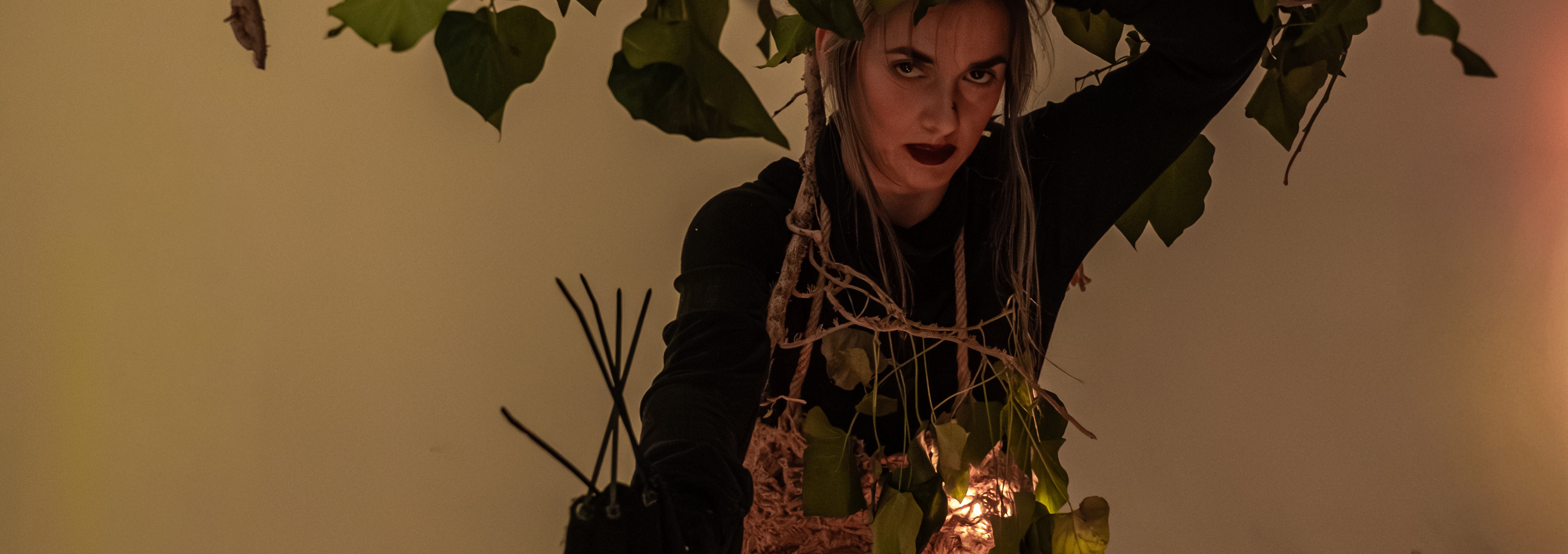
While doing my research for my current project, Devyah, I came across Baba Yaga, a slavic fairytale character that despide her seaming evil at a superficial glance, is actually a quite complex persona… like most, if not all, ‘evil’ feminine characters.
From reading Shankaranarayanan’s “Daśa Mahāvidyā”, I can tell that men put all their fears in the female character’s they imagined, goddesses or otherwise.
Because we mostly have (hi)stories written/collected by men. However, the oral storytellers were mostly women, and Baba Yaga retains a lot of her ancient wisdom which came from the slavic godess of earth and fertility, Mokosh, before she was turned from godess to an old woman who eats innocents by Christianity and patriarchy.

Baba Yaga is a character who lives in the woods, deeply connected with the environment and what we consider ‘wild’ life. She rewards those who show reverence and respect to (thier true) nature and punishes those who do not. She lives in rituals which strengthen her connection with her authentic wild self.
Her house is a reference to nomadic people traveling the north eastern parts of Europe, who built storages on pillars so animals couldn’t reach them. Baba Yaga’s house is build on huge chicken legs who walk frantically and keep spinning until the visitor says the right words for it to stop and let them in. The house is surrounded by a fence of human bones and skulls as a warning for whomever approaches.
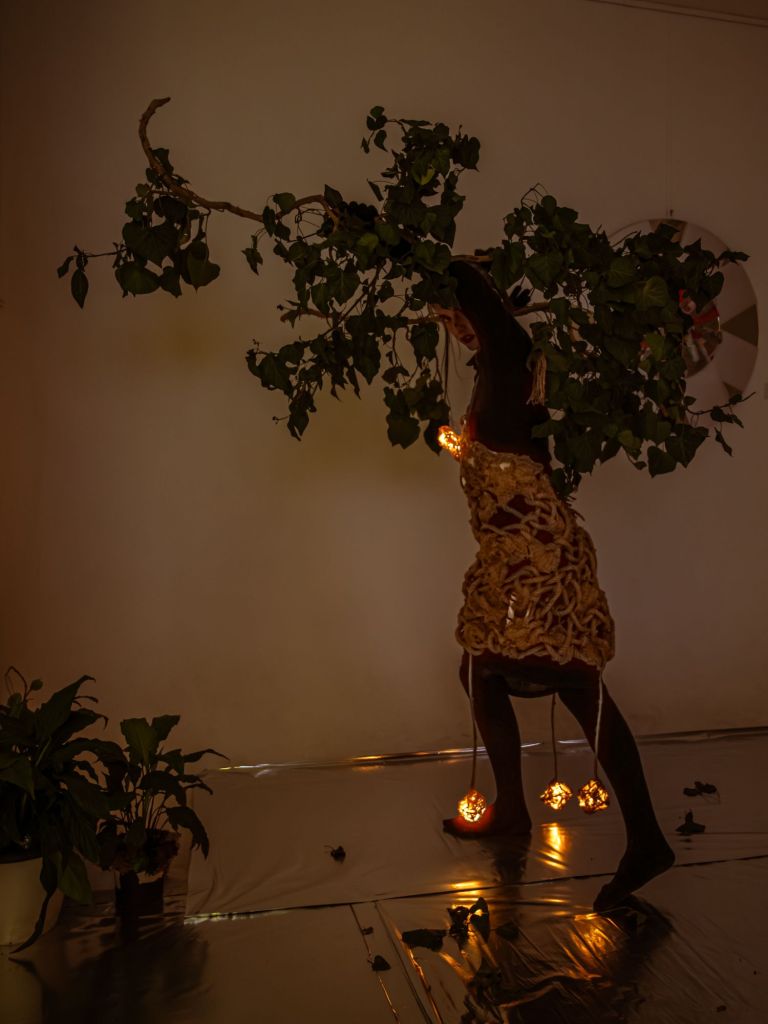
The stories in which Baba Yaga is a character are mostly coming of age stories or the main character is asking help to save others, not for themselves. Those who come with selfish goals end up eaten or transformed into household objects.
The etymology of the the name Baba Yaga is also interesting because ‘baba’ in Russian is grandma, but in Romanian ‘babă’ means old woman and is quite a pejorative term. On the other hand, in Sanskrit, ‘baba’ means beloved. The meaning of Yaga is not very clear, but I like the idea that it meant either snake or disease in old Russian because we still contect the snake with health today in the symbol for pharmacy, and so did the ancient Greeks until Christianity stepted in and turned the snake into an evil being.
There is a lot of symbolism in the stories involving Baba Yaga and you can listen to more explanations here.

I chose her as inspiration for the performance I did at the end of my personal exhibitions, Devyah, last weekend, because I felt a connection with her history, evolution and resilience, which I see in most women I meet, surviving and even thriving in a world that is no longer build for them. Although Baba Yaga is portaied as a monster, I have learned for the past two years that monsters, barberians and other such labels were plastered on people by the actual monsters, those who build empires at the expense of locals/ others.
Through this performance, I raised the question of what is a monster really.
One of the first answers was that monsters are parts of us who protect us, but hurt others whom we perceive are hurting us.
Another answer was that monsters are those who distroy out of pleasure. At this I questioned if it is possible to create without destroying… no? Than do artists feel joy when creating and therfore destroying something ? Yes. Are we monsters? Depends who you ask, I guess haha
There were several who stated that there’s a monster in all of us because of our thoughts. Our thoughts are monsters. They may be… but is it constructive to view them as such?
What is a monster though? We don’t know. Maybe we will find out next time.
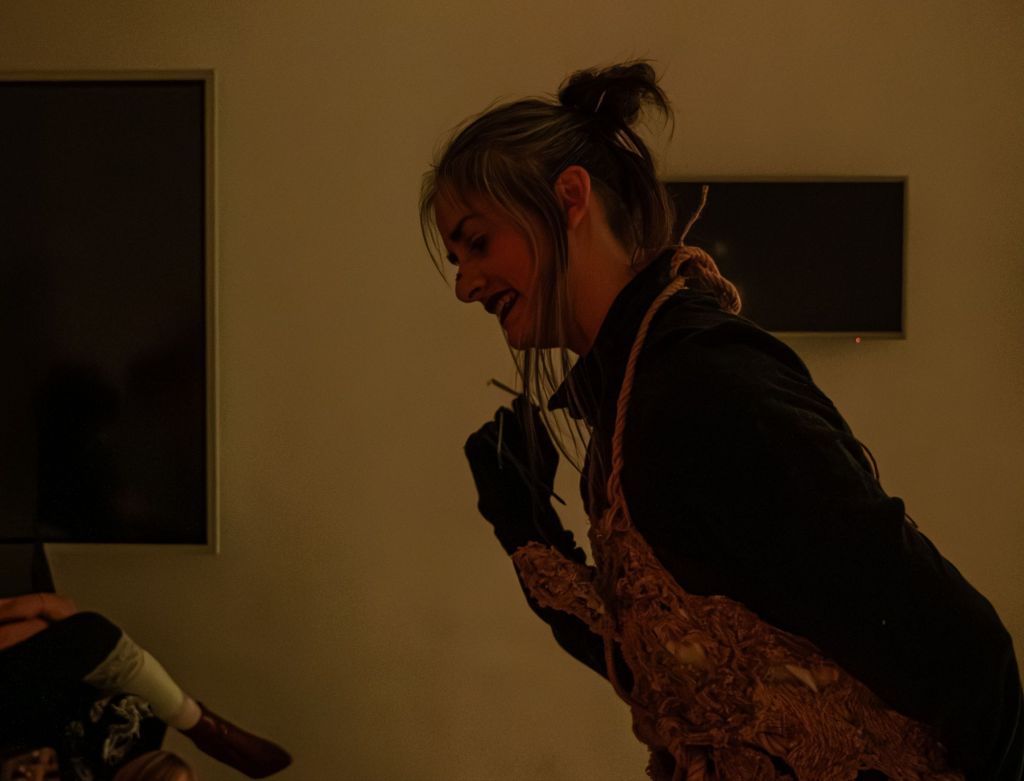
Could it be anything we are afraid of? So is it a characteristic of them or us? And if we perceive the monster within us? Who are we? Definitely not a monster. Here we are missing the community we used to have to show us that.
I found Baba Yaga in slavic death metal music and in the book “Women who run with wolves“. In this book, the author speaks about how the (female) mind is composed of several aspects who in the stories she reveals in the book are looking for a way to live harmoniously and contribute to the fulfilment of the person. Some aspects are destroyed in the stories.
After the performance, I was asked who Baba Yaga is and while telling the story, someone exclaimed “So, she wasn’t eating people for no reason. It was deserved”. Is it though? Is violence ever warranted? Especially when it’s not self defence? Or was that self defence? Imagine a(n) (old) woman leaving all by herself in the woods…
The answers came from the public to whom I am very gratefull for their engagement and support.
The performance is called “Who is afraid of Baba Yaga?” as a reference to the movie “Who is afraid of Virginia Woolf?” which I haven’t seen, but Virginia Woolf was the first female writer I was fascinated with and who shaped my view on femininity.
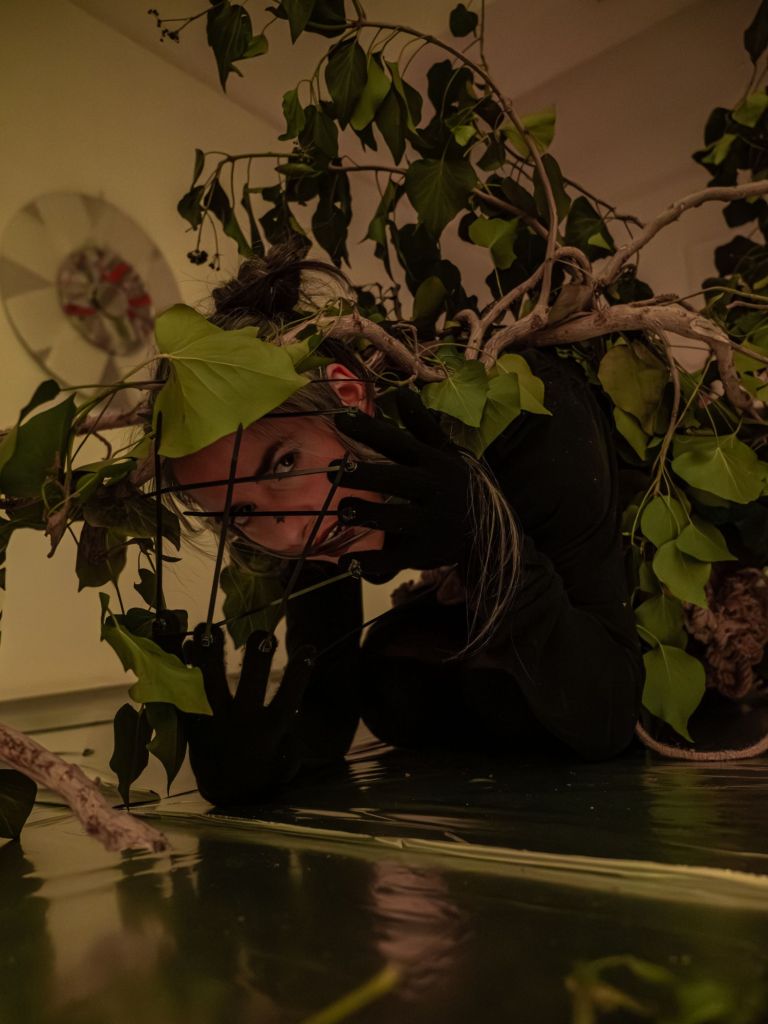
Inspite of me, the performance was child friendly, and actually cute. I will not make the same mistake next time 😈
📸 by Alina-Maria Moldovanu (https://www.instagram.com/puffartcreations)


 The joy of creating